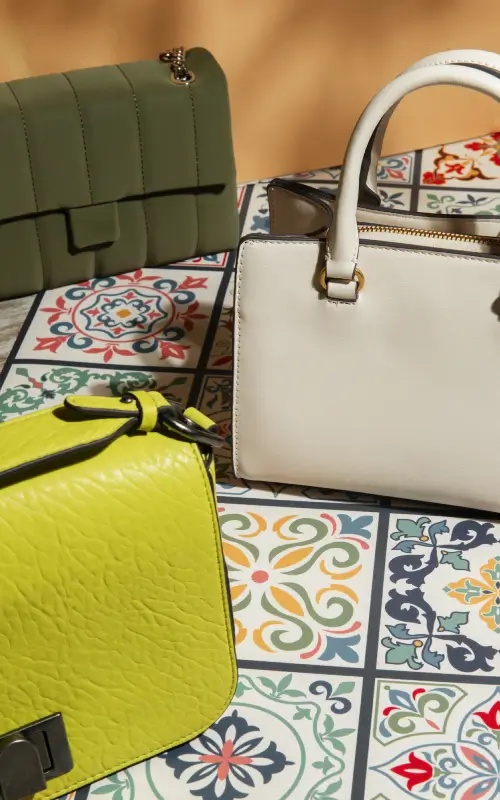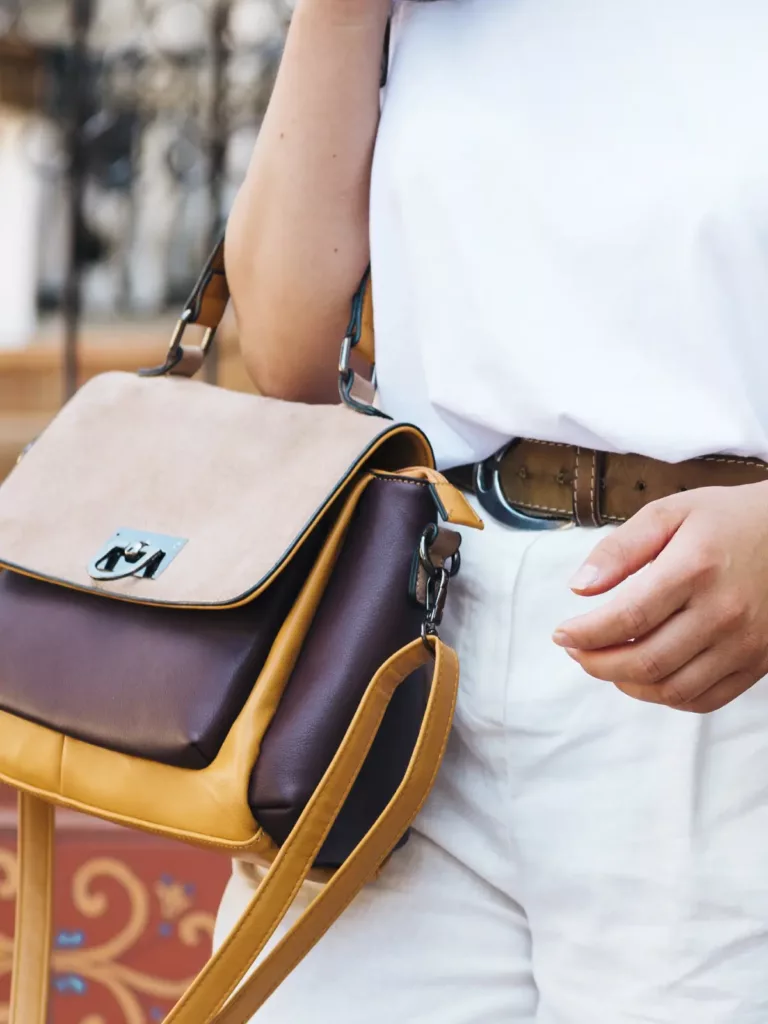

The global handbag market hit USD 74.32 billion in 2025, and mini bags are driving a significant portion of that growth. Buyers are no longer treating compact bags as a seasonal experiment. These are core inventory items with steady turnover.
But here is the real question for wholesalers and brand owners: How do you match mini handbags with seasonal leather trends without sitting on dead stock?
Wingtubag has been manufacturing bags in Yiwu for over 20 years. Our factory runs 500 skilled workers through automated lines, pushing out 150,000 pieces monthly. We have learned one thing clearly—success in mini handbags wholesale comes down to matching the right material trend with the right structural design.
This article walks you through the 2026 leather color forecast, structural engineering for small formats, and exactly how to source without the usual factory headaches.
The 2026 Leather Color Forecast for Mini Bags
The mini bag market in China alone reached 180.1 billion yuan in 2025, with global projections climbing to 1,126.7 billion yuan by 2032 at a 7.90% CAGR. That growth attracts every supplier. Standing out requires hitting the right colors.
Commercial Neutrals That Move Year-Round
Neutral leathers remain the backbone of any wholesale order. For 2026, expect demand for:
- Deep burgundy (carries from fall through spring)
- Forest green (emerging as the new neutral in premium lines)
- Warm camel (consistent performer across all price points)
These colors work because mini bags often function as accent pieces. A customer buying a compact bag wants it to complement multiple outfits. Neutrals deliver that versatility.
Statement Accents That Drive Impulse Purchases
The data shows mini bags retail between USD 20 and USD 45. At that price point, customers buy on impulse. Statement colors trigger that impulse.
Watch for:
- Dusty periwinkle (trending across European luxury houses)
- Soft mint (performing well in spring/summer collections)
- Terracotta (strong in resort wear and travel categories)
What This Means for Your Procurement
When you work with OEM bag manufacturers, color matching becomes a technical challenge. Different leather grains absorb dye differently. A dusty periwinkle that looks perfect on a smooth PU sample may appear dull on a textured finish.
We maintain relationships with over 220 fabric suppliers to solve this. Before we cut any production run, we run color fastness tests across your chosen material and finish combination. This is not an extra service. It is the baseline requirement for sellable inventory.

Structural Engineering for Mini Bags That Actually Sell
Here is a problem we see constantly. A buyer orders a mini bag sample. The sample looks fantastic. Then the bulk shipment arrives, and the bags do not hold their shape. The zippers strain. The seams show stress points.
The Compact and Capacious Paradox
Mini bags face a unique engineering challenge. Customers buy them for their small size but then stuff them full—phone, keys, lipstick, card holder, power bank. The bag needs to look compact on the shelf but survive daily overload.
Our approach focuses on three structural elements:
- Gusseted side panels (allow expansion without distortion)
- Reinforced bottom inserts (prevent sagging under weight)
- Double-stitched stress points (specifically at strap attachments and zipper ends)
Hardware That Does Not Fail
Gold-tone zinc alloy locks and closures sell the bag. But cheap hardware ruins the product. We see too many suppliers using light-gauge metal that bends or rusts within months.
Our hardware standard is simple. Zinc alloy with anti-rust coating. Hasp closures that click securely. Zippers that run smoothly even when the bag is overstuffed. These details cost pennies more but eliminate returns.
How Innovative Bag Design Solves Real Problems
Innovative bag design for mini formats means rethinking interior organization. A mini bag without internal pockets becomes a black hole where small items get lost.
Our current designs include:
- Detachable zipper pockets for valuables
- Fixed side pockets sized for lipstick and keys
- Card slots built into the lining (reduces the need for a separate wallet)
These features come from watching how actual customers use the bags—not from looking at competitor catalogs.

Low MOQ and Agile Sampling for Seasonal Testing
The biggest risk in seasonal fashion is overcommitting to a trend that fades. We solve this with low minimum orders and fast sampling.
Why Two Pieces Change Your Buying Strategy
Most factories require 300 to 500 units per style. That forces you to bet big on a single color or design. If the trend shifts, you are stuck with inventory.
We set our MOQ at 2 pieces per style. This lets you:
- Test multiple colorways in small quantities
- Validate sell-through rates before reordering
- Adjust your assortment based on actual sales data
Sampling That Does Not Waste Your Time
Traditional sampling takes 15 to 25 days for first samples. By then, your market window may have closed.
Our sample process runs differently. Because we own our factory and control our production schedule, we deliver samples within 7 to 14 days. Custom logos add one more day.
This speed matters when you are chasing a seasonal trend. A two-week sample turnaround versus four weeks can mean the difference between launching with the trend or missing it entirely.
Customization Without Complexity
Personalized bags drive brand loyalty. But many factories treat customization as a headache—long lead times, high minimums, and constant miscommunication.
We treat customization as our core service. Options include:
- Custom colors (matched to your brand palette)
- Logo placement (foil, embossed, or woven label)
- Dimensional adjustments (within structural limits)
- Hardware finish changes (gold, silver, gunmetal, or matte black)
The key is that we do this without resetting the entire production line. Modular tooling and flexible material sourcing make small-batch customization profitable for both sides.
One-Stop Bag Procurement for Wholesale Buyers
Managing multiple suppliers for bags, hardware, packaging, and logistics creates inefficiency. Each supplier adds lead time, quality variation, and coordination cost.
What One-Stop Procurement Actually Includes
When we say one-stop bag procurement, we mean we handle:
- Material sourcing (leather, PU, Oxford fabric, hardware)
- Sample development and approval
- Bulk production across multiple styles
- Quality control at every stage
- Packaging and labeling
- Shipping and documentation
Wingtubag has over 30,000 square meters of warehouse space and more than 3 million units in stock. This is not a trading company piecing together orders from different workshops. This is a single factory system.
Quality Control Across the Process
The difference between a sample and bulk production kills many wholesale relationships. The sample looks great because skilled workers handle it carefully. The bulk order fails because production speed compromises quality.
Our quality control runs five stages:
- Incoming material inspection (before cutting)
- In-process checks (every 100 units during assembly)
- Hardware function testing (zippers, clasps, locks)
- Final visual inspection (stitching, alignment, finish)
- Packing verification (labels, polybags, cartons)
We maintain these standards whether your order is 2 pieces or 20,000 pieces.
After-Sales Support That Matters
Wingtubag‘s service does not stop at delivery. If you receive units with defects, we document the issue, credit your account, and adjust our production process to prevent recurrence. We also help with restocking coordination and provide product troubleshooting for your customer service team.
FAQ
What is your minimum order quantity for custom designs?
Our MOQ starts at 2 pieces per style for stock designs. For fully customized designs with new patterns and tooling, we work with you to find a quantity that makes production sense—typically starting around 100 pieces.
How do I get a sample before placing a bulk order?
Send us your design reference or pick from our catalog. We produce samples within 7 to 14 days. Sample costs apply but are refundable against your first bulk order.
Can you match any leather color I request?
Yes. We work with over 220 fabric and leather suppliers. Send us a Pantone code or physical reference, and we match it. Color fastness testing is included before production.
Do you protect my designs and brand IP?
Absolutely. We sign non-disclosure agreements before any design discussion. Your patterns, hardware molds, and brand assets stay confidential.
What is your typical production lead time?
Bulk production takes 30 to 45 days from sample approval. Rush orders may be possible depending on our production schedule. We ship worldwide via air or sea freight based on your timeline.
Ready to source mini handbags for your next seasonal collection? Use our Bag Finder tool to browse available styles, or send us your design brief for a custom quote.
Request a Quote | Upload Your Design File | Chat with Our Sales Team