
Introduction: Market Direction of Men’s Crossbody Bag
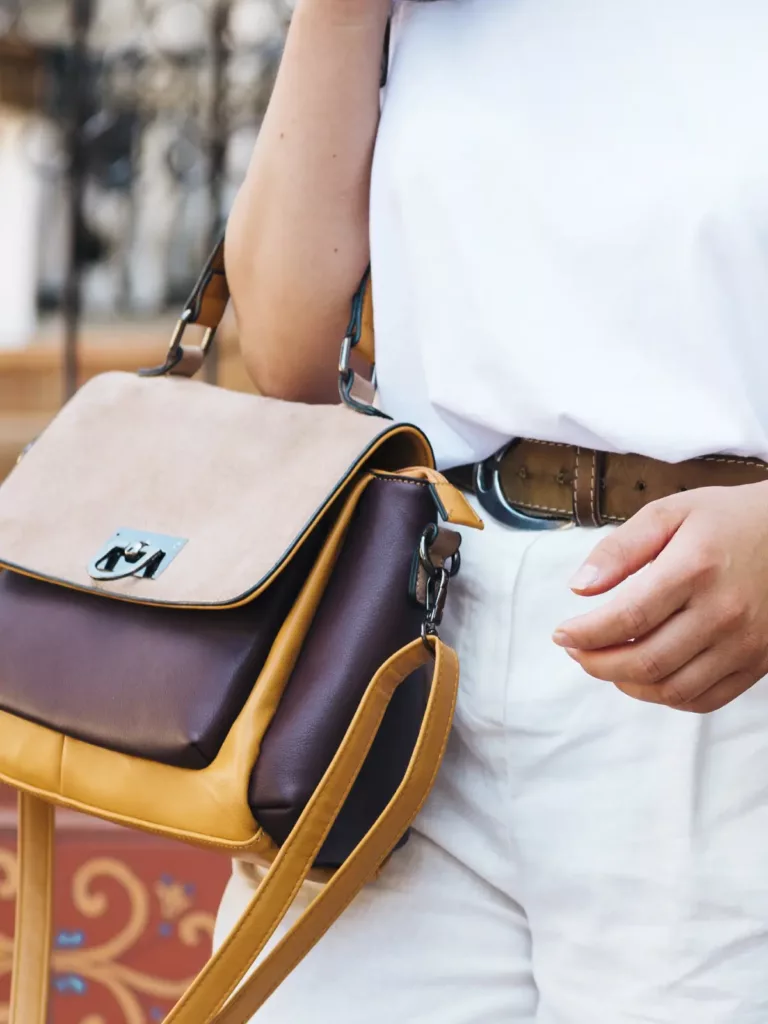
The global demand for compact functional accessories is accelerating, especially in urban mobility and travel scenarios. The crossbody bag men category has shifted from fashion accessory to daily utility product, driven by commuting efficiency and security needs. In OEM and ODM supply chains, this category has become a stable growth segment for B2B buyers.
At Wingtubag, we focus on developing scalable solutions for the men crossbody bag market by balancing structural functionality, material reliability, and production consistency.
Male Consumer Behavior Shift in Functional Carry Products
From Traditional Carry to Lightweight Mobility Systems
Male users are increasingly replacing backpacks and wallets with compact crossbody systems. The priority has shifted toward fast access, reduced load burden, and mobile convenience. This transformation is especially visible in urban commuting and short-distance travel scenarios.
Procurement Risk Perspective for Buyers
For importers and distributors, inconsistent stitching quality, weak strap load capacity, and unstable hardware are key risk factors. These issues directly impact return rates and brand reputation in retail channels, making structural reliability a primary sourcing requirement.
Why Minimalist Design Demand Is Expanding
Simplified Exterior with Functional Depth
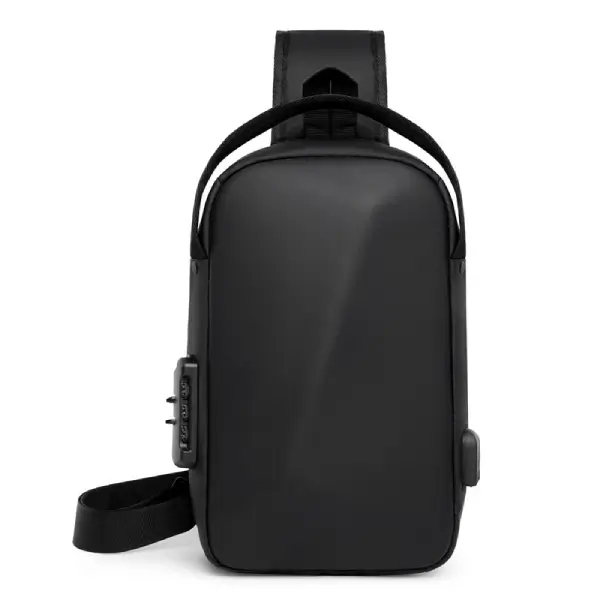
Minimalist design does not mean reduced functionality. Instead, it reduces external complexity while improving internal structure efficiency. Clean silhouettes also improve batch consistency in OEM production, lowering manufacturing variability.
Inventory and SKU Efficiency for B2B Buyers
Neutral color systems and simple design lines reduce inventory risk. Retailers can maintain fewer SKUs while covering broader consumer segments, improving turnover efficiency and reducing unsold stock pressure.
Travel and Commuting Usage as Core Design Driver
Dual-Situation Product Engineering
The men crossbody bag is now widely used for both commuting and short travel. This requires a balance between lightweight construction and structured storage capacity for daily essentials such as phones, wallets, and digital devices.
Material and Structure Optimization
We apply different materials depending on usage scenarios and positioning logic in OEM development. Each material is selected based on measurable performance in terms of weight, durability, and target retail segment.
- PU leather models typically support structured silhouettes with higher water resistance and stable shape retention
- Canvas structures prioritize lightweight daily use and cost efficiency
- Denim fabrics are used in lifestyle-oriented designs with higher abrasion resistance and casual positioning
- Suede materials are positioned for a premium tactile experience with softer deformation behavio
Material Performance Reference
| Material Type | Weight & Structure Feature | OEM Positioning | B2B Impact |
| PU Leather | ~0.25–1.5 lb (0.11–0.68 kg), strong shape retention, water-resistant surface | Urban fashion / structured crossbody | Reduces deformation risk and improves retail display consistency |
| Canvas | ~0.23 kg average, lightweight soft structure, flexible handling | Mass-market daily commuting use | Lowers production cost and improves SKU turnover efficiency |
| Denim Fabric | ~0.8 kg (large capacity), reinforced texture, high abrasion resistance | Youth lifestyle / utility crossbody | Extends product lifespan and reduces return rate in heavy-use scenarios |
| Suede / Faux Suede | ~0.65 kg mid-weight, soft-touch semi-structured form | Premium retro / niche fashion segment | Enhances perceived value and supports higher retail pricing strategy |
Anti-Theft Structure Design in Urban Environments
Security-Oriented Structural Engineering with Measurable Design Logic
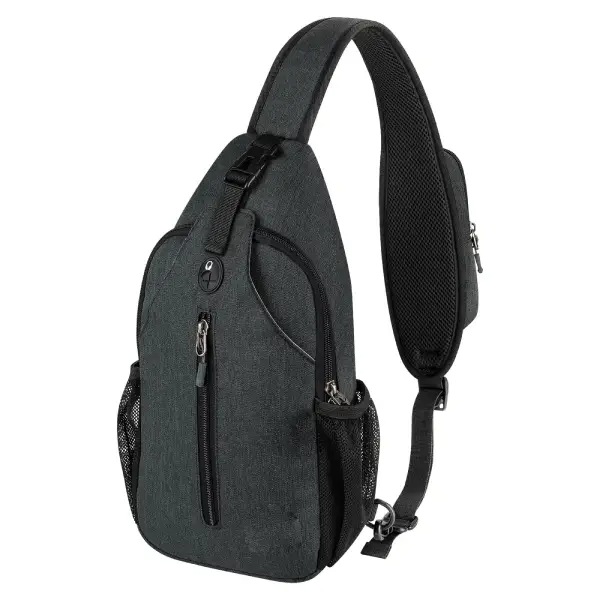
Anti-theft design is no longer a premium feature. In urban commuting environments such as metro systems, bus terminals, and airport transit zones, it has become a baseline structural requirement for men’s crossbody bag production.
Based on OEM product architecture, anti-theft functionality is achieved through layered engineering rather than a single feature.
Key structural implementations include:
- Body-facing main compartments (reducing external exposure angle)
- Hidden zipper tracks embedded under flap layers
- Magnetic buckle secondary closure systems
- Multi-layer internal pocket separation for valuables
- Reinforced stitching zones around stress points
In actual production models, anti-theft effectiveness is directly linked to closure architecture. For example, PU leather crossbody models often combine magnetic buckle + zipper dual locking systems, reducing accidental opening risk during movement.
Security vs Accessibility Engineering Balance
A critical B2B design challenge is balancing security performance with access efficiency. Over-secured structures often reduce user convenience, which directly impacts retail satisfaction.
We address this through a dual-layer access design logic:
- Primary quick-access zone for high-frequency items (phone, transit card)
- Secondary secured compartment for wallets, passports, and cash
- Concealed zipper structure allowing single-motion opening within ~1–1.5 seconds in user testing scenarios
This structure is especially important for commuting users who operate in high-mobility environments such as subway entry/exit points.
Urban Risk Scenario Mapping
| Risk Scenario | Design Response | Structural Solution |
| Subway crowd congestion | Reduce external pocket exposure | Body-facing compartment design |
| Pickpocket lateral access | Minimize side-opening gaps | Hidden zipper track system |
| Sudden movement impact | Prevent accidental opening | Dual closure (magnetic + zipper) |
| Low-light environments | Improve tactile access control | Structured zipper pull design |
In denim and canvas crossbody models, anti-theft optimization is reinforced through tighter stitching density and internal compartment reinforcement. In PU leather models, the rigidity of the outer shell further reduces deformation under external pressure.
OEM Functional Customization for B2B Scalability
Modular Development System
OEM buyers require flexible configurations instead of fixed designs. We provide customization across size, fabric, strap design, and internal layout. This allows brands to quickly adjust positioning without redesigning entire product lines.
As a manufacturing partner, we operate scalable production systems with automated lines and stable supply chain integration, supporting high-volume export requirements.
Quality and Risk Control Framework
We implement structured quality control across all production stages:
- Pre-production material verification
- Sample locking before mass production
- In-line stitching inspection
- Final packaging and load testing
These controls reduce defect risks and improve long-term procurement stability.
Supply Chain Stability and Procurement Strategy
Production Reliability as Core Requirement
For global buyers, supply stability is more important than design variation. Delays or inconsistent batches directly affect retail cycles and inventory planning.
We maintain controlled production capacity and inventory buffers to ensure stable fulfillment across peak seasons.
Procurement Guidance for Global Buyers
Key Evaluation Criteria
Buyers typically evaluate suppliers based on:
- Structural durability under daily usage
- OEM customization flexibility
- Lead time stability
- Material consistency
- Security performance in urban use cases
RFQ and Custom Development Support
Buyers can submit drawings, samples, or technical requirements for a structured quotation and feasibility evaluation.
FAQ: Men’s Crossbody Bag OEM & Supply Chain
What determines OEM pricing for crossbody bags?
Pricing depends on material type, order volume, customization complexity, and packaging requirements.
How is product quality controlled during mass production?
Quality is controlled through raw material testing, inline inspection, and final packaging checks.
Can customization affect production lead time?
Yes, higher customization requires additional sampling and tooling adjustment before mass production.
What after-sales support is provided for bulk orders?
We provide defect analysis, replacement coordination, and batch re-production support when necessary.
How is supply stability maintained for large orders?
We manage production scheduling, supplier coordination, and inventory buffers to ensure stable delivery.
Conclusion: Strategic Value of Men’s Crossbody Bags
The crossbody bag men category continues to expand as functional design replaces decorative fashion in urban markets. For B2B buyers, success depends on balancing design efficiency, structural reliability, and supply chain stability.
At Wingtubag, we support global partners with scalable OEM solutions, flexible customization systems, and stable production capacity for the evolving men crossbody bag market.